
Description
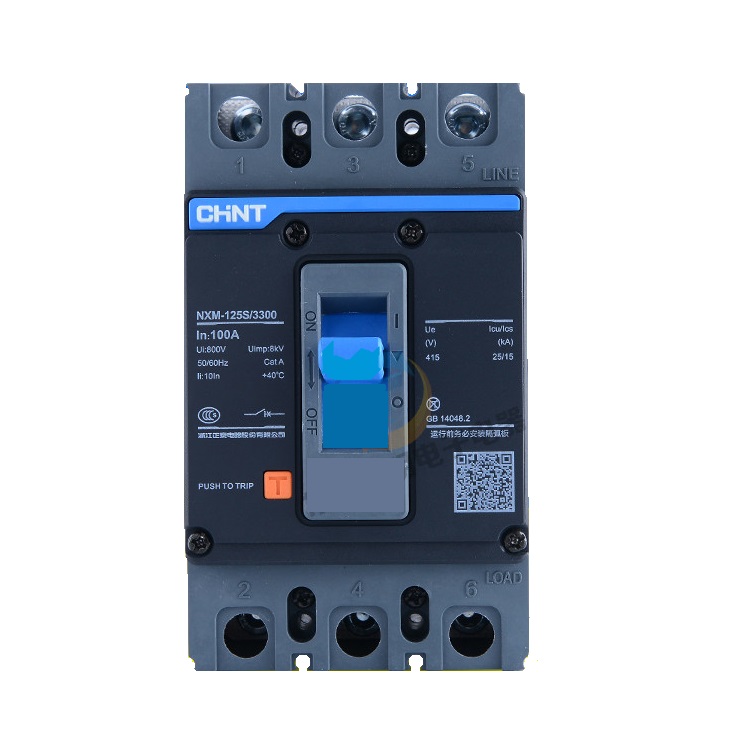
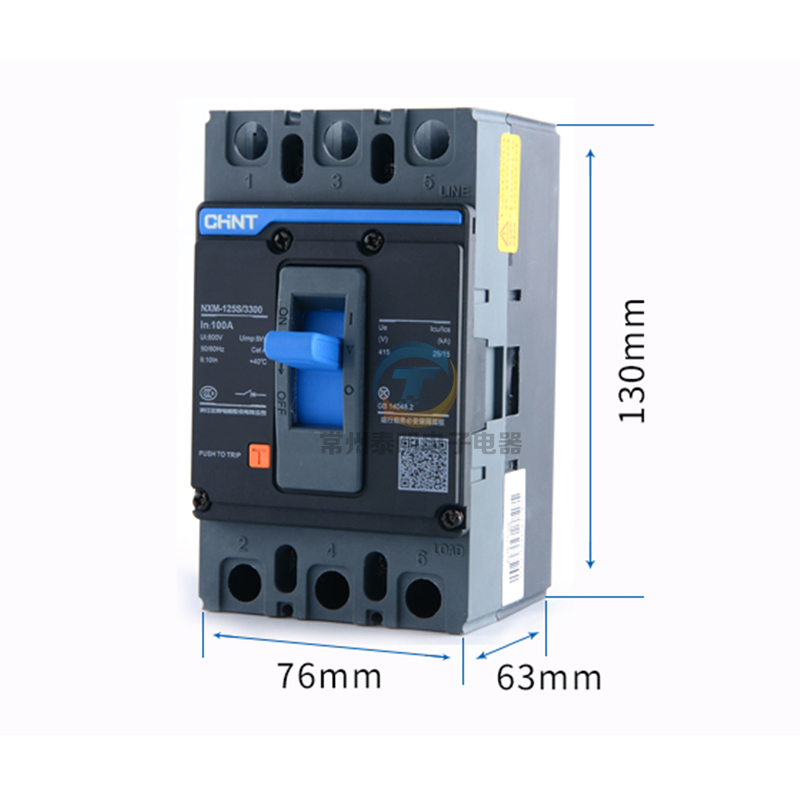
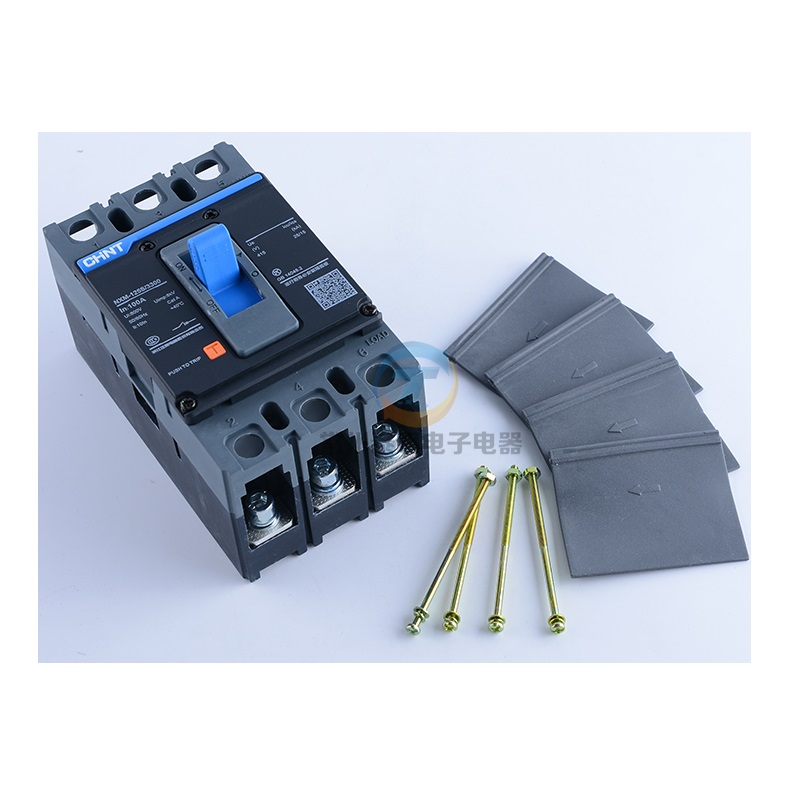
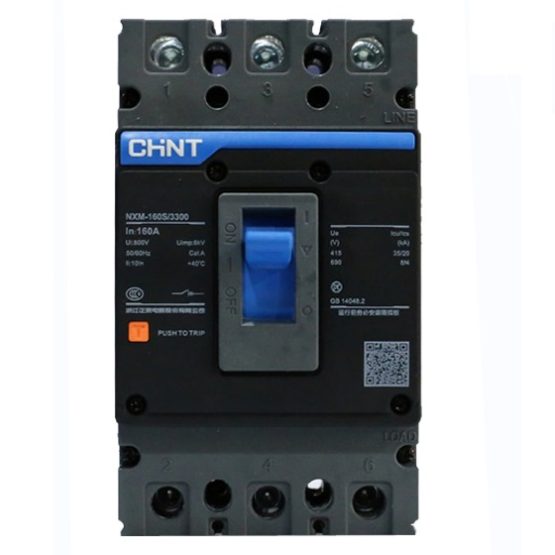
Product: MCCB (moulded case circuit breaker) 3 pole
Brand: Chint
Model: NXM-125 S
Number of pole: 3
Rated Current: optional 80, 100 (must write)
Frequency: 50/60 Hz
Rated Short-Circuit Breaking Capacity: 25 kA (25000A)
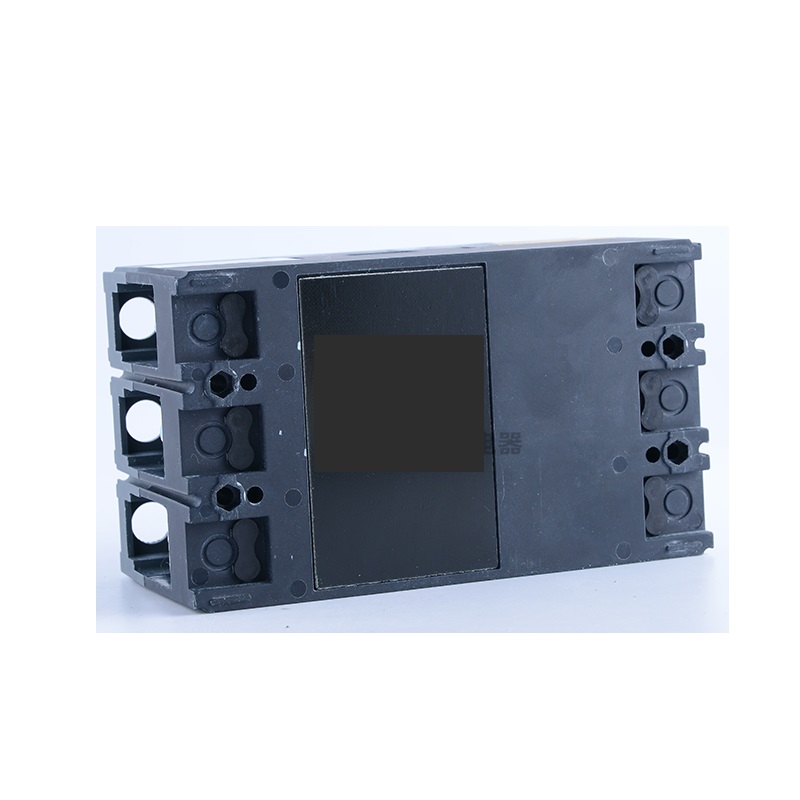
Mounting: with screw
Mounting mode: vertical or horizontal
Type: fixed
Certificates: KEMA, ESC, UKrSEPRO, PCT, RCC, KC
Standard: IEC/EN 60947-2
Specification
- This moulded case circuit breaker (MCCB) is a type of electrical protection device that is used to protect the electrical circuit from excessive current, which can cause overload or short circuit.
- With a current rating of up to 2500A,
- MCCBs are used mostly in industrial areas on high voltage and heavy duty machinery.
- These breakers are used instead of miniature circuit breakers (MCBs) in large scale PV systems for system isolation and protection purposes.
- The MCCB uses a temperature sensitive device (the thermal element) with a current sensitive electromagnetic device (the magnetic element) to provide the trip mechanism for protection and isolation purposes.
- This enables the MCCB to provide:
- Overload Protection,
- Electrical Fault Protection against short circuit currents, and
- Electrical Switch for disconnection.
Sizing
- MCCBs in an electrical circuit should be sized according to the circuits expected operating current and possible fault currents.
- The three main criteria while selecting MCCBs are:
- The rated working voltage (Ue) of the MCCB should be similar to the system voltage.
- The trip value of the MCCB should be adjusted according to the current drawn by the load.
- The breaking capacity of the MCCB must be higher than the theoretical possible fault currents.
Purpose of trip Button
- This test is conducted by testing the response of the MCCB under simulated over-current and fault conditions.
- Thermal protection of the MCCB is tested by running a large current through the MCCB (300% of rated value).
- If the breaker fails to trip, it is an indication of failure of thermal protection.
- The test for magnetic protection is conducted by running short pulses of very high current.
- Under normal conditions, magnetic protection is instant.
- This test should be conducted at the very end as high currents increase the temperature of contacts and insulation, and this may alter the results of other two tests.


Ammanullah –
Good working thanks